

The history of the suit
Find out more about the history of tailoring and the suit. We have summarised and illustrated the most important points in history for you.
Introduction
"The first form of clothing consisted of animal skins that were wrapped around the body. When man discovered that animal hair cut into strips could be plaited and then woven into cloth, it was suddenly possible to produce completely new types of clothing. The essential component here was a mostly rectangular cloth, which was produced on simple predecessors of the loom and worn as a kind of coat over the shoulders or around the hips as a skirt." [1]
The art of tailoring developed in Europe between the 12th and 14th centuries. The cutting and sewing together of cloth were two basic aspects that led to the use of patterns in the manufacture of clothing. In 1297, the term "tailoring" was included in the English Oxford dictionary. However, the basic principle of the craft was already widespread in Europe centuries earlier. [2]
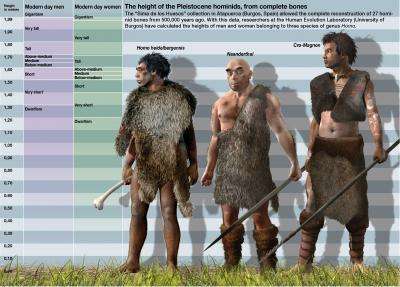
The basic functions of clothing are to protect and warm the body. In the 15th century, clothing began to consciously emphasise the human body: In the Renaissance, the medieval garment was cut shorter and tighter, with the aim of recreating the shell of the human body.
At that time, tailoring was still divided into the production of patterns and sewing together. These two areas were each carried out by a specialised individual. Up to this point, the majority of the population wore specially made clothes. As time went on, the role of the tailor became more and more important, giving him the same status as a weaver, until tailoring finally became a profession in its own right. [3]
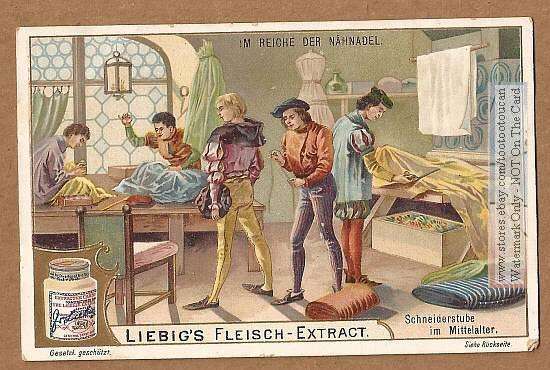
With the growth of the cities, the business process changed: instead of making house calls to customers, the tailor was now visited in his shop, as he was now dealing with the clothing needs of large sections of society. This is how bespoke tailoring was born and developed into a highly specialised craft.
Custom tailoring was first evident in Italy, then in Spain and France. In the field of fashionable clothing, Italy reached its peak in the 16th century, Spain only at the beginning of the 17th century. Due to its great wealth and power, France was the centre of fashion from the middle of the 17th century to the beginning of the 18th century. At this time, France was one of the wealthiest nations in Europe and therefore also had a great influence within cultural and craft areas. The peak of French fashion took place during the reign of the "Sun King" Louis XIV, who ruled from 1643 to 1715. [4]
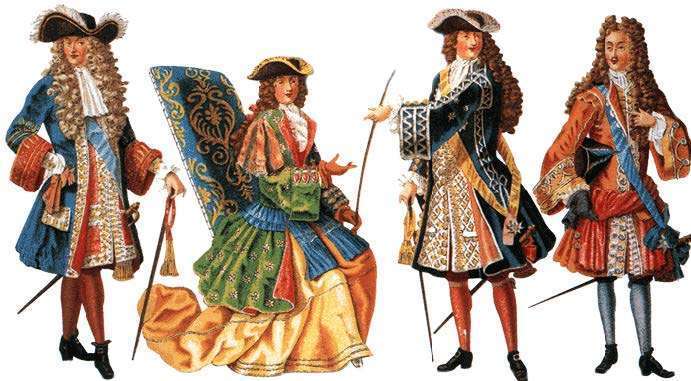
Around this time, numerous fashion-conscious young men from all over Europe travelled to Paris to be dressed. Under the reign of Louis XIV, men began to wear combinations of coat, waistcoat and knee breeches, which slowly replaced the doublet and tubular clothing of the Renaissance. The influence of the new three-piece suit was felt throughout Europe at the latest after the death of Louis XIV.
The English even adopted the modern three-piece suit directly and Charles II, following Louis XIV's example, made it the official garment. In the 18th century, the three-piece suit became increasingly discreet and simplified. At the beginning of the 19th century, simplicity was so popular that the nobility dressed almost like the bourgeoisie.
In the middle of the 19th century, England dominated the fashion scene, where top hats, frock coats and umbrellas were among the most important accessories for the population. [5]
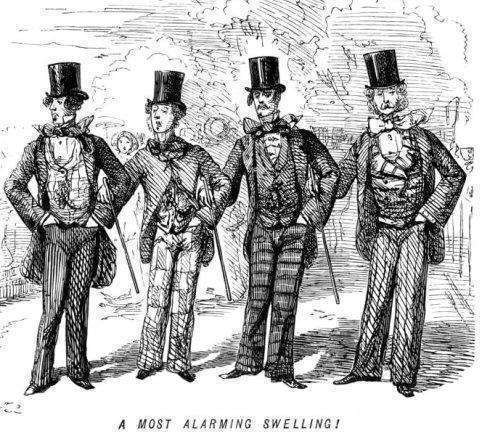
English tailors in particular made a name for themselves with a special style for men's clothing. In contrast to the colourfulness and pomp of the aristocracy, they simplified fashion and made the cut of suits more form-fitting again. Cotton in particular was frequently used in English fashion. Special care was taken to adapt the textiles to the body without the fabric actually following the body line. To do this, however, tailors first had to study the structure of the human body and measure it and the fabric precisely. Through a lot of practice, tailors were able to perfect their skills and establish fashion as an art form.
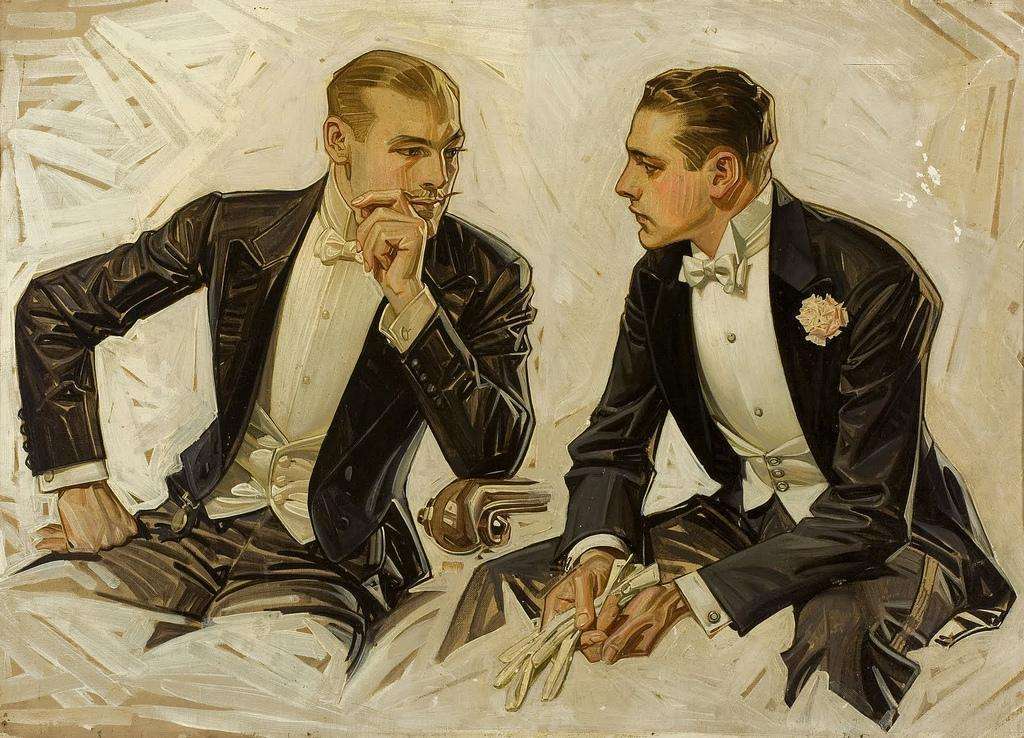
As a result, inconspicuousness dominated over extravagance, simplicity over complexity and perfect cuts were favoured: men became "gentlemen". Although the modern suit had already been introduced in the mid-17th century, it was only through the art of tailoring that it spread and became famous. From today's perspective, the work of the tailor has been significantly simplified by the use of sewing machines. In addition, new technologies allow suits to be sewn more quickly and mass-produced. Over time, tailoring became more and more like scientific rather than artistic work. Nevertheless, the craft of tailoring can still be seen as an art form rather than a science. Personalised and individual clothing can only be created through the dedication of the tailor.
[1] Aus dem Englischen “The Male Image”, Penelope Byrde p.50 ins Deutsche übersetzt
[2] http://www.eurekalert.org/multimedia/pub/44337.php?from=214007
[3] http://justsaynotomccain.info/~justsayn/images/aw2k/LotImg26791.jpg
[4] http://17emesiecle.free.fr/images/Elegances-sous-LouisXIV.gif
[5] http://www.victorianweb.org/art/costume/nunn20.html
[6] http://www.collectorsweekly.com/articles/the-perfect-american-male/
[7] http://www.gurdastailor.com/page-1-Our%20Products%20&%20Services.html
The history of the suit - Part 1
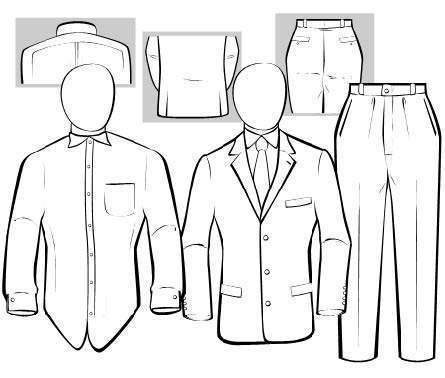
The modern version of the suit is a three-piece suit consisting of a coat, waistcoat and trousers. This combination originated in England towards the end of the 17th century.

In the 1670s there were variations in style and cut. However, the essential shape of the suit remained the same. The coat initially reached to the knee and the waistcoat was also long. Over time, the coat became a jacket. The waistcoat cut was also shortened to the waist. All three garments are still very popular today and continue to be worn. "In 1666, during the reign of Charles II, the men of the English court dressed like the French men at the court of Versailles. They wore: long coats, waistcoats, a forerunner of today's cravat, knee breeches, wigs and hats."[2]

The Victorian era (1837-1901)
In the Victorian era, the three-piece combination was mainly worn in different materials and in different colours. It was not until 1860 that the coat, waistcoat and trousers began to be sewn from the same fabric. The fabrics were mostly made of silk, wool and linen. The latter was used for light summer suits.
The frock coat was popular with men and became standard dress for balls and business occasions. Towards the end of the 19th century, informal clothing was particularly popular. The modern suit was usually worn for sports and outings in the countryside.
At the same time, the dinner jacket was invented, which was intended for informal evening events, known as the tailcoat. This suit was worn with a black tie and is now known as a dinner jacket. The dinner jacket was originally only worn at small private gatherings, later also at large formal events.

The Edwardian period (1901-1914)
In the early 20th century, wearing a frock coat in the morning became popular with men. Initially favoured only by business men, the frock coat became part of every man's everyday wardrobe. The popular men's suit deviated from its original concept and was also accepted in the city, outside the home, during the reign of Edward VII.
Around this time, the frock coat was gradually replaced by the tailcoat in European fashion. In America, an evening version of the tailcoat was invented, the dinner jacket. This was only worn by men on semi-formal occasions.
At the beginning of the 20th century, men mainly wore costumes in dark colours. These consisted of wide trousers, a plain shirt and a waistcoat. To go out, men also wore a wide coat and a hat.

The quality of the fabrics and workmanship distinguished the suit of an upper-class man from that of a more modest one. Wealthy men wore embroidered collars, for example, and had accessories such as gold tickers or a carved cane.
The sporty silhouette of the men's suit of the 1890s remained. Hair was generally kept short, beards were less pointed than before and moustaches were often curled.
Coats, waistcoats and trousers
The sack coat had replaced the frock coat for informal and semi-formal occasions. People wore three-piece suits consisting of a sack coat with matching waistcoat and trousers. This three-piece suit featured colour contrasts. Either the coat and waistcoat were made in the same colour and contrasted with the trousers, or the waistcoat and trousers contrasted with the coat.


The trousers were shorter than before and often had cuffs. They were also creased with the new trouser press. The usual western style was single-breasted and the waistcoat closed all the way up to the chest.
At this time, the Norfolk jacket was intended for outdoor activities. This evolved into the Norfolk suit, which was used for sporting activities such as cycling or golf. It was worn with knee-length stockings and low shoes.
For hunting, the Norfolk suit was combined with leather gaiter boots or shoes.
The tailored morning coat, on the other hand, was still worn with striped trousers for formal daytime occasions.
The dark tailcoat with dark trousers was worn in combination with a dark light waistcoat and was considered the most formal evening wear. A white bow tie was worn as an accessory under a corner collar.

The less formal dinner jacket only had a single button and is colloquially known as a dinner jacket. The shawl collar of the dinner jacket had silk or satin panelling. A white shirt with a dark tie was worn under the dinner jacket. In winter, calf- to knee-length coats were worn with it. The dinner jacket was worn at dinner, at home or in men's clubs.
Shirts and ties
From today's perspective, the collars of dress shirts were very high and were reinforced. The fronts of the shirts were also reinforced and decorated with shirt pins.
Striped shirts were very popular for informal occasions.
There were different styles of shirts: attached collar and incorporated cuffs, separate collar and incorporated cuffs or separate collar with attached cuffs.
with attached cuffs. The collars and cuffs were attached to the shirt with pins.
Instead of sewn-on buttons, cufflinks were used to fasten the shirt cuffs.
"Cufflinks are two jewellery buttons connected by a chain or metal bar, or a jewellery button with a metal bar and toggle. The cufflink was introduced in the mid-19th century in addition to the roll (separate, stiff cuffs) and has been used since the 1960s until today for the double cuff - although this is only used on evening shirts."[8]

Ascot ties were worn with formal daywear, while the white bow tie was intended for evening wear. [10]
Accessories
Top hats were widely worn as headgear by the upper classes. A homburg or bowler hat was worn to complement the street or tailcoat suit. The straw hat was worn on casual occasions.
Lace-up boots up to the ankle with a reinforced toe completed the men's outfit. Everyday shoes were black, grey or brown. Formal boots were usually white at the top and buttoned at the sides.
Belle Epoque - "Beautiful Era"
The Franco-Prussian War from 1870 to 1871 came to an end. This was followed by a long period of peace. Economic and cultural development flourished in the western European countries, which lasted until the First World War (1914 - 1918).

Gieves & Hawkes
Gieves & Hawkes has had its shop at 1 Savile Row in London since the end of 1912. The company is now part of the Hong Kong Trinity Ltd company and is one of the oldest bespoke tailors in the world.
The company produces both ready-to-wear and bespoke suits as well as, true to its roots, military suits.
History of the company
Thomas Hawkes opened his first shop in Brewer Street in 1771, the year Gieves & Hawkes was founded. The shop originally catered to the needs of the British Army and Royal Navy
and counted commanders of the British Army and King George III among its clients. In 1809 the company was granted Royal Warrants for various services rendered to the Royal Household.
In 1852, Gieve joined forces with Joseph Galt. He bought the remaining shares by 1887 and founded Gieves & Co.
The company "N°1 Savile Row", which was then part of the Royal Geographical Society, was taken over by Hawkes & Co on 23 December 1912. Since 1974, Gieves Ltd has been owned by Hawkes & Co and therefore also owns the company "N°1 Saville Row". This was subsequently renamed Gieves & Hawkes.
In 2012, the company was taken over by Trinity Limited's based in China.

Today, Gieves & Hawkes suits continue to be tailored. Over 100 shops sell the brand in the United Kingdom, China and Taiwan. Some of the brand's famous customers include Winston Churchill, Charlie Chaplin, Bill Clinton and Diana, Princess of Wales.
Brooks Brothers

Founded in 1818 as a family business, Brooks Brothers is considered the oldest menswear chain in the United States and has established itself on Madison Avenue in Manhattan, New York City.
The history of the company
In 1818, Henry Sands Brooks opened his company "H. & D.H. Brooks & Co" in Manhattan, New York. His personal claim to the company was:
"To make and deal only in merchandise of the finest body, to sell it at a fair profit, and to deal with people who seek and appreciate such merchandise."
In 1850, Brooks' sons Elisha, Daniel and John inherited the family business and renamed the company "Brooks Brothers". Brooks Brothers became famous above all for the introduction of the off-the-peg suit.
The Brooks Brothers company counted important personalities among its customers, such as the President of the United States, Abraham Lincoln.
He was wearing one of the brand's suits at the time of his assassination in 1865.

- http://www.gutenberg.org/files/27056/27056-h/27056-htm
- Aus dem Englischen, http://en.wikipedia.org/wiki/History_of_suits, ins Deutsch übersetzt
- http://www.gutenberg.org/files/34845/34845-h/34845-htm
- http://thebengalstripe.blogspot.de/2011/04/edwardian-era-street-style.html
- http://www.memorystore.org.uk/_images/fashionPics/largepopup/BainbridgeCoAdvert.jpg
- Klassiker der Mode, Ingrid Loschek 1999
- http://www.theage.com.au/photogallery/executive-style/style/suits-through-the-ages-20110217-1axqz.html?aggregate=&selectedI

mage=0
- http://www.memorialhall.mass.edu/activities/dressup/notflash/1900_man.html
- http://olddesignshop.com/wp-content/uploads/2013/11/OldDesignShop_ONeillCatalogueMensClothingBW.jpg
- http://www.thestyleking.com/page/63/?attachment_id=jwlkeqbissvux
- http://offthecuffdc.com/wp-content/uploads/brooks-art-2-court.-Ivy-Style.jpg
- http://en.wikipedia.org/wiki/File:The_Assassination_of_President_Lincoln_-_Currier_and_Ives.pn


The history of the suit - Part 2
Hugo Boss
Hugo Boss is one of the best-known fashion brands with German origins. The company is based in Metzingen and is named after its founder Hugo Boss (1885 - 1948).
The history of the company
Hugo Boss founded his clothing company in Metzingen in 1924. Due to the poor economic situation in Germany at the time, this had little success and Hugo Boss had to close his company.
A few years later, in 1931, he was able to start again with six sewing machines. As a member of the National Socialist Party of Germany (NSDAP) and as a supporter of the Schutzstaffel (SS), he received special support from the state.
After joining the German Labour Front in 1936 and the Reichsluftschutzverbund in 1939, Hugo Boss' sales skyrocketed. The company's profits rose from 5,000 Reichsmarks (the currency at the time) to 241,000 Reichsmarks within a very short space of time.

Hugo Boss had already become a supplier of National Socialist uniforms in 1928. In 1934, he became an officer licensed by the Reichszeugmeisterei to supply uniforms for the Sturmabteilung, the Schutzstaffel, the Hitler Youth, the National Socialist Motor Corps and other Nazi institutions.
During the war, between 30 and 40 prisoners of war and around 150 forced labourers from the Baltic states, Belgium, France, Italy, Austria, Poland, Czechoslovakia and the Soviet Union worked for the company. In 1946, Hugo Boss was convicted for his co-operation with the Nazis and lost the right to run a company.
Subsequently, Hugo Boss's son-in-law, Eugen Holy, took over the company. In 1950, the company received its first orders for men's suits - a new product group for the company at the time. Towards the end of the year, the company expanded and now employed 150 people. A further 10 years later, the company was already producing its suits off the peg. In 1969, Eugen Holy's sons Jochen and Uwe began international marketing and the associated development of the international market. Hugo Boss has been a registered trademark since 1977.

This was followed by commitments in a wide variety of sectors. In the years that followed, the brand became involved in motorsport and sponsored the McLaren Formula 1 team.
The first Boss fragrance was released in 1984. This was responsible for the biggest growth to date on the Frankfurt Stock Exchange, which the company recorded in the following year 1985. As part of its involvement in various sports, Boss supported the golfer Bernhard Langer from 1986 and sponsored the Davis Cup, the most important competition for national men's tennis teams, a year later.
In 1989, Boss launched its first sunglasses before the company was sold to a Japanese group in the same year.
Despite its terrible past, Hugo Boss is still one of the best in the business today. Today, Boss is a brand of ready-to-wear clothing that specialises in high-end men's and women's fashion.
The company is known for its constant new trends and has been influencing fashion for years. With its dynamic and innovative appearance, the company continues to surprise consumers and fulfil their expectations - thus the company remains up-to-date and is considered timeless[3].

1920
The year 1920 marked the beginning of the modern era in fashion. Today's men's suits are based on the styles of the late 1920s.
In 1920, Gieves & Hawkes was the first company to sell off-the-peg suits. In the same year, the company Brooks Brothers introduced the light-coloured Madras fabric from India. Madras is a light cotton structure made of various fabrics, primarily in multi-coloured plaids or stripes, used for shirts, dresses, jackets, etc.
Men's fashion in the early 1920s was dominated by tailored, short-cut suit jackets. As these were buttoned very high, they had relatively narrow lapels. The style of this period was almost identical to the military uniforms from the First World War. Trousers were short, tight and straight-cut and often had cuffs. The previously fashionable longer jacket was only worn sporadically for formal occasions.

Around 1925, a new style became popular: the "Oxford bags". Oxford bags were wider than ordinary trousers. To match the wide trousers, the lapels of suit jackets became wider again, as did their sleeves.
Towards the end of the 1920s, double-breasted waistcoats were often combined with single-breasted jackets.
Morning suits were mainly worn for formal occasions, while short dinner jackets were widespread at evening events.

The ties of gala suits were always white, while black ties were worn with dinner jackets. Both white and black waistcoats were fashionable in combination with dinner jackets. Dinner jackets were worn with the same accessories as standard men's suits.
During the 1920s, men's clothing became less formal. Casual clothing was increasingly worn, including shorts.
The formal men's suit usually consisted of a black or dark blue satin tailcoat, which was combined with matching trousers. The
The trouser leg was trimmed with a wide braid or satin ribbon. The outfit was usually completed with a white bow tie, a black silk top hat, white gloves, Oxford leather shoes, a white silk handkerchief and a cornflower.
The trend at the beginning of the 1920s towards tight neckbands with buttonholes on the front and back of men's shirts changed in the middle of the decade. As a result, the attached collar was favoured, which felt softer and more comfortable.

1930
The 1930s were overshadowed by a global economic crisis, the Great Depression, which was also reflected in fashion. The bright colours of the previous decade had given way to more muted and drab colours. At the beginning of the 1930s, the fall cut enjoyed great popularity, especially with the London fall suit. Frederick Scholte, tailor to the Prince of Wales, was the initiator. In contrast to previous models, the fall suit was softer and therefore more comfortable to wear. It was also easier to make as additional fabric was used in the shoulder and a light filling in the armhole. The nipped waist and slanted, fuller sleeves at the wrist resulted in a beautiful cut, which also emphasised the man's figure visually.

The 1930s also saw the introduction of new styles of summer evening suit. Waist-short white jackets were now worn with a cummerbund instead of a waistcoat. The white dinner jacket, both single and double-breasted, was combined with a black bow tie and black trousers trimmed with braid. In 1935, the wide trousers of the 1920s were narrowed at the hem. Famous actors such as Fred Astaire, Cary Grant and Garry Cooper wore the suit and were partly responsible for its great success.
Accessories
The fedora was predominantly worn as headgear, usually at a slight angle. In addition to this, the homburg remained popular, especially among senior citizens. The latter was now worn with semi-formal evening wear. The hat gradually became more formal again.
The ties of this era were wide and often decorated with geometric patterns.

- http://profashionals.files.wordpress.com/2013/07/boss.jpg
- http://www.cvltnation.com/genocide-and-hi-fashion-the-hugo-boss-nazi-collection/
- https://lh4.googleusercontent.com/-glT0X1dg-XU/UN3EJasN5UI/AAAAAAABJ-E/1lQ23nJzGPE/s2048/IMG_2585.JPG
- http://www.thefedoralounge.com/showthread.php?6684-The-1920-JAZZ-SUIT/page11
- http://mshedgehog.blogspot.ch/2013/01/trousers-too-big-1925.html
- http://www.blacktieguide.com/History/1920s/1919_vintagevictorian_com.jpg
- http://www.google.de/imgres?imgurl=http%3A%2F%2Fwww.cfa.ilstu.edu%2Flmlowel%2Fthe334%2F1930sandwwii%2FMen%2F


1930sDrapeSuits.jpg&imgrefurl=http%3A%2F%2Fwww.cfa.ilstu.edu%2Flmlowel%2Fthe334%2F1930sandwwii%2F20s30swwiimenr eview.htm&h=391&w=400&tbnid=OEuofrEQF3c3UM%3A&zoom=1&docid=Cy9ygBo5TUYv0M&ei=HEqHU7P0AsnL0AX0loDgAg&tb m=isch&iact=rc&uact=3&dur=2373&page=1&start=0&ndsp=40&ved=0CG8QrQMwBw
The history of the suit - Part 3
Post-war period (1945-1960)
After the war, men wore broad-shouldered double-breasted suits. Trousers were predominantly cuffed. In America, fashion was mainly characterised by wide lapels and bold accessories[1].
In Britain, clothing was still rationed. Soldiers no longer serving wore blue or grey "chalkstripes" suits, which were provided by the government. The traditional Savile Row house was badly damaged by the war and was slow to recover.
In 1950, Savile Row introduced Edwardian fashions, characterised by slightly flared jackets with natural shoulders and generally tighter cuts. Suits were combined with bowler hats and coats with collars and cuffs. The "Teddy Boys" ushered in the Edwardian style. They completed their outfits with light-coloured socks and the use of shoelaces as ties.

The Teddy Boys represented a subculture of young men who were recognisable by their characteristic Edwardian style of dress. They were characterised above all by drainpipe trousers, shoelace ties and straightened forelocks in their hair, as well as a preference for rock'n'roll music[3].
After the Second World War, the tailors of the traditional Savile Row house attempted to reintroduce the Edwardian style to Britain. The shocking appearance of the Teddy Boys dissuaded them from this endeavour and the style was dropped[4].
The English drape suit was widely used in men's fashion. The drape is a single-breasted, two-piece suit with a tighter lining and less padding in the shoulders. It was usually worn in a dark grey. The flannel suit was also introduced to men's fashion at this time.
Towards the end of the 1950s, a new style appeared from Italy, characterised by sharper shoulders, lighter fabrics, shorter fitted jackets and narrower lapels.
Accessories
In the 1960s, hats became less and less important. At this time, eyebrow glasses were increasingly used. The hairstyles of the time were dominated by the wet look, which was achieved through the use of hair products.

At the beginning of the 1960s, men continued to dress predominantly in dark grey suits or grey flannel suits and thus remained very formal.
Nevertheless, the 1960s were to bring changes and progress in fashion. After fashion had remained very conservative in the previous decades, artists such as the Beatles brought energetic trends to fashion in this era. These inspired millions of people. As a result, conservative business suits took on a clean, straight cut, while the wardrobe in general became more stylish. Suits became slimmer and trousers tighter.
Shirts were tailored and gave the wearer an excellent silhouette. Over time, more and more coloured suits were created. Whereas previously almost all suits had been black and worn with white shirts, the new colour trend was largely due to the Beatles.

Musicians, namely the Monkees, were also responsible for the introduction of the Nehru Collar. The Nehru Collar (origin in India: Jawaharlal Nehru) is a short stand-up collar on a shirt or jacket.
Tailoring shops boomed with the new trends and companies such as Saville Row, which had previously only sewn elegant and formal menswear, took up the new style for young men.
The 1960s were characterised by the quest for personal liberation, for the best that life could offer[7].
In 1964, Hardy Amies wrote the book "ABC of men's fashion". The sentence: "A man should look as if he had bought his clothes with intelligence, put them on with care and then forgotten all about them", gives an indication of the high value placed on men's fashion in the mid-1960s.

The upheavals in men's fashion lasted until the early 1970s. Major changes also took place in the area of hairstyles and haircuts.
After trousers had become tighter in the mid-1960s, the low waist and platform shoes became part of men's everyday appearance in 1972. As a result, men's fashion became tighter and tighter. A large proportion of clothing was made from polyester or a blend of cotton and polyester. Velour and terry fabrics were increasingly used in the manufacture of shirts.
Two different types of suit were very popular with men in the 1970s. The leisure suit, which was introduced in 1972 by John Travolta in "Saturday Night Fever", enjoyed great popularity thanks to the successful film. The tracksuit was also very successful in the 70s and was worn almost everywhere.
At this time, men no longer wore hats, their hair was much longer and their shirts were no longer tucked into their trousers. Collars were worn wide and trousers were tight[9].
In addition, great importance was attached to male hair such as beards and chest hair, as this symbolised masculinity.


The 1970s were not a great era for suits, they were an era of flair and colour. The suit was largely characterised by influences from music. The desire for diversity made the era an experimental time in terms of fashion. [11]
Italian designers in particular enjoyed great success in this era. Giorgio Armani, for example, made a name for himself in Milan with his clean lines and unique workmanship.
Giorgio Armani
The Italian fashion designer Giorgio Armani became world famous for his menswear and customised dresses for women. He founded his company in Milan in 1975. Around 25 years later, in 2001, Giorgio Armani was recognised as the most successful Italian designer. Today, the Italian designer has an annual turnover of 1.6 billion dollars and a fortune of 8.5 billion dollars.
After joining the army in 1953 and completing his service, Armani worked as a window dresser at La Rinascente, a department store in Milan. He later became a salesman in the menswear department. He gained a wealth of experience in the fashion industry and in marketing. In 1965, the future star designer created his first garments for Nino Cerruti.
In 1970, Armani met the architectural draughtsman Sergio Galeotti and projects were realised together. Giorgio Armani subsequently worked as a freelance designer for a number of fashion houses such as Allegro, Bagutta, Hiltons and others.
The 1980s were seen as a decade of great excess and men's fashion also had to be special in all areas[12].
Men's clothing style was often characterised by social or musical commitment, and in some cases work and leisure wear overlapped. The clothing of this era knew no boundaries and styles of any kind could be combined at will.

Casual clothing

Fashion in the 80s was characterised by various influences. Many men modelled themselves on actors such as Don Johnson and Phillip Michael Thomas from the popular TV series "Miami Vice" and adopted their style. Casual combinations of jackets and T-shirts, white or pastel-coloured suits and loafers or boat shoes were the order of the day. In the office, rolled-up sleeves and open jackets were worn and ties increasingly disappeared. Actor Tom Selleck popularised the Hawaiian shirt through the series "Magnum", which was worn both for business and pleasure.

Formal dresses
Towards the end of the 70s, the preppy style that emerged in the 50s was rediscovered and was very important until the 80s. Central elements of this style were "cotton down" Oxford shirts, polo shirts with different collars, waistcoats and khaki penny loafers. Argyle jumpers were also tied loosely around the neck.

The suits of the 80s were predominantly grey-brown and baggy. After the loud, colourful 1970s, Giorgio Armani changed the style from extravagance to minimalism, which was to characterise the entire decade.
From 1990, the classic suit was revitalised by Helmut Lang and the designer couple Comme des Garcons. Skintight trousers, white shirts and slim black ties became an integral part of men's fashion. Single-breasted button jackets also enjoyed great popularity. [17]

Helmut Lang
The Austrian artist Helmut Lang lives and works in New York / Long Island. In 1992 he made his appearance with thermal leather and body-conscious shapes and attracted attention the following year with haute couture made of pure cashmere or velvet.
In 1999, the Prada Group bought 51% of the Helmut Lang company. From then on, Prada was responsible for the distribution and production of the clothing and Lang for the design and advertising.
Comme des Garcons
Comme des Garcons was founded in Tokyo in 1969 by fashion designer Rei Kawakubo together with her husband Adrian Joffe.
The French expression "Comme des Garçons" translates as "just like boys". During the 1970s, the company enjoyed great success, particularly in Japan. This was followed by the debut in Paris in 1981, where the always black clothing was provocative due to its simplicity, reminiscent of poverty.
In the 90s, Quentin Tarantino played with the same idea in "Reservoir Dogs" and helped the classic suit to enjoy a new lease of life.

The three-button suit was worn for a large part of the 2000s and to a certain extent formed the continuation of the fashion of the previous decade.
Now the suit was increasingly mixed with new trends. In the USA, for example, argyle patterned socks, khaki chinos, Oxford shoes, loafers and jumpers were increasingly worn in the workplace. The trend, known as "smart casual", aimed to create a look that was both smart and casual. From the mid-2000s, a trend based on subcultures became increasingly popular alongside retro fashion.
In the UK workplace, the formal suit remained in vogue, with the three-button suit leading the way.
Nehru suits and mandarin collars were also frequently seen in the mid-2000s. The mandarin collar took centre stage thanks to Keeanu Reeves' outfit in the film Matrix and became a major trend in the UK's major cities.
In the USA, on the other hand, men still preferred to wear a casual yet elegant style. They dressed in dinner jacket shirts, chinos, cardigans and blazers.
At the end of the 2000s, slim-fit suits became fashionable in Europe.
The two-button blazer also replaced the three-button suit. The new blazer was worn with matching trousers, a slim tie and a waistcoat.

The slim-cut suits that were already fashionable around 2010 are still in vogue today. The designers of the 2010s were inspired by the suits of the 1930s and 1950s. Today, references to the single-breasted suits of the time with broken lapels can be found in predominantly dark suits, which have been made even narrower.
The TV series "Mad Men" revitalised the two-button suit, which was already popular in the 1960s. The slim-fit mohair suits were particularly popular in England, Italy and the USA. The outfits were complemented by dress shirts with round collars, hats, thin ties and dinner jacket shirts.
There was a great demand for Edwardian-style suits in Great Britain, the Netherlands and Germany. Boots inspired by the US Civil War era as well as bowler hats and Homburg hats were increasingly worn. Also in fashion were waistcoats, thin ties and ascots, some of which are still in fashion today.
Translated with DeepL.com (free version)

- http://en.wikipedia.org/wiki/1945–60_in_fashion#Suits
- http://www.harkavagrant.com/index.php?id=200
- http://www.oxforddictionaries.com/definition/english/Teddy-boy
- http://en.wikipedia.org/wiki/1945–60_in_fashion#Suits
- http://loomings-jay.blogspot.de
- http://nicholasstixuncensored.blogspot.ch/2014_02_01_archive.html
- The day of the peacock Style for men 1963-1973
- http://www.voicesofeastanglia.com/wp-content/uploads/2012/04/Menswear-600x400.jpg
- http://www.retrowaste.com/1970s/fashion-in-the-1970s/1970s-fashion-for-men-boys/
- https://img0.etsystatic.com/028/1/7473307/il_340x270.504330590_9dv6.jpg
- http://roberto.setimadimensao.com/?p=595
- http://mens-fashion.lovetoknow.com/What_Did_Men_Wear_in_the_80s
- http://www.wikihow.com/Dress-in-the-American-1980s-Fashion
- https://img0.etsystatic.com/017/1/8550626/il_340x270.561510600_lf0n.jpg
- http://www.styleforum.net/t/83232/i-want-to-start-wearing-a-suit-every-day/90
- http://www.ivy-style.com/ivy-trendwatch-wwd-on-upcoming-preppy-book.html
- http://imgur.com/a/u9N66?gallery
- http://en.wikipedia.org/wiki/File:Single-Double-Breasted.svg
- http://2.bp.blogspot.com/-7TnH05KJj6Q/ToqFcRFKU4I/AAAAAAAAAcc/JIe26xsnr6U/s1600/reservoir-dogs.jpg
- http://menofcolorstyle.blogspot.de/2012_01_01_archive.html
- http://fashionthroughtime1.blogspot.de/2012/12/edwardian-era-queen-victoria-died-in.html

